Kai H. Kayser, MBA, MPhil
Portugal. 11 Dec 2025.
From Crippling Debt to Mass Emigration — the EU is Bleeding Portugal Dry.
Here is the Evidence.
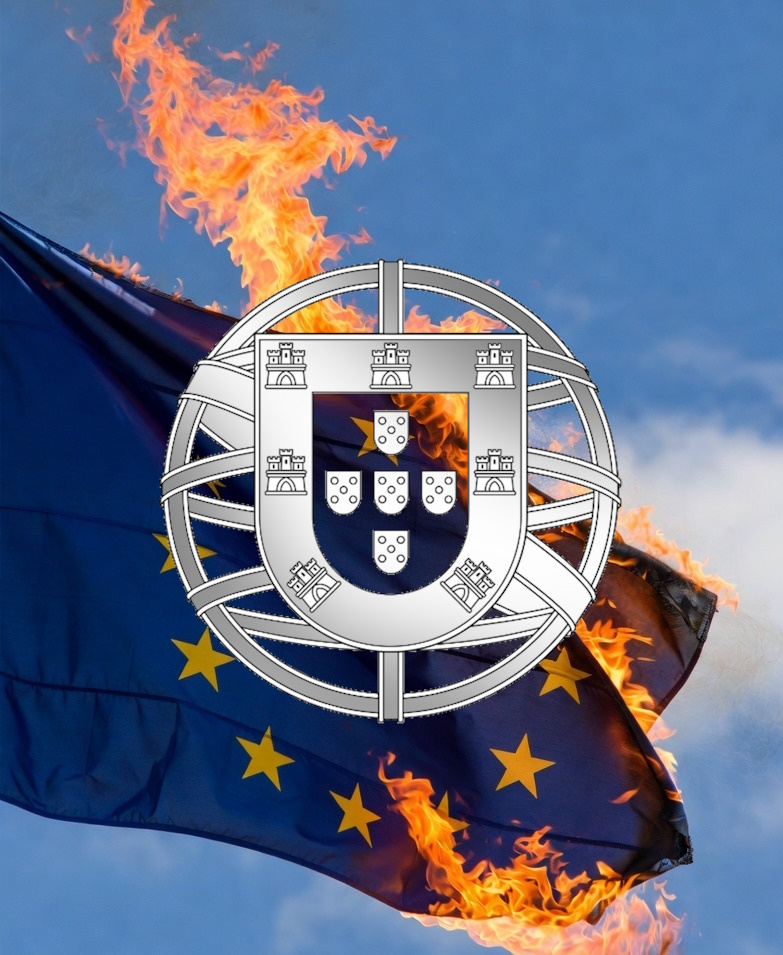
In the shadow of Brussels’ grand illusions, Portugal finds itself shackled to a union that promised prosperity but delivered stagnation. As we stand on the precipice of 2026, with our economy wheezing under the weight of euro-bureaucratic dogma, green mandates, and an unprecedented inflation, it’s time to confront the uncomfortable truth: the European Union is not a partnership of equals but a tyranny of the mediocre, corrupt, and economically clueless. It is a redistributional racket designed to extract wealth from the productive periphery and funnel it to an unproductive central seat—the euro version of the Kremlin—leaving the middle classes, workers, and farmers of its member countries hollowed out. Portugal’s youth flee, its few remaining industries wither, and its sovereignty erodes—all in the name of an integration that benefits Brussels and Strasbourg only. This is no abstract grievance; it is a ledger of losses, etched in the numbers of Iberian—and especially Portuguese—decline. Portugal’s debt-to-GDP ratio, 93.6% in 2024 [https://economy-finance.ec.europa.eu/economic-surveillance-eu-member-states/country-pages/portugal/economic-forecast-portugal_en] is a testament to the EU’s fiscal straitjacket, where austerity is perverted into the stick to castigate the least deserving and bailouts as the carrot, again benefiting only the least deserving. Portuguese fishermen, once masters of the Atlantic, now watch Spanish and Dutch fleets plunder what should be Portugal’s. And as real wages stagnate while taxation and costs of materials are raging, the euro reveals itself not as a bridge to unity, attracting talent and labour, but as a toll road to subservience. The case for exiting the EU—let’s call it Pexit—is not born of nostalgia for some mythical past, but of cold calculation: without radical rupture, Portugal risks becoming a starving vassal state. Below, ten ironclad reasons why Portugal must reclaim its destiny before the noose tightens further and breaks the spine.
- Portugal’s Debt Burden: A Eurozone Albatross
Portugal ranks among the world’s most indebted nations, with public debt projected at 91.3% of GDP in 2025 [https://economy-finance.ec.europa.eu/economic-surveillance-eu-member-states/country-pages/portugal/economic-forecast-portugal_en]—a figure inflated by Brussels’ arbitrary deficit rules that favour formerly surplus-generating powerhouses like Germany (now also suffering from EU- and homemade economic demolition). These edicts force us into endless, erroneous austerity cycles, stifling investment and growth. To be clear: austerity is a great thing, but not unleashed upon the working people! Austerity needs to be enforced on governments. Public debt is enslaving future generations and the surest way to kill innovation and productivity. The “austerity” Europe gets to suffer is simply a turbo-charger on the redistribution enriching technocrats, their cronies, and NGOs in Strasbourg and Brussels. Leaving the EU would unshackle our budget, allowing us to prioritise Portuguese needs. - The Great Exodus: One of the Highest Emigration Rates in Europe
Portugal has the highest emigration rate in the European Union and one of the highest in the world. Between 2010 and 2019, the country experienced the most intense wave of departures in its recent history. Today, approximately 2.3 million Portuguese citizens live abroad—equivalent to more than 20% of the resident population. Of these, around 70% are aged between 15 and 39, meaning Portugal is exporting its youngest and best-educated generation at an alarming rate [https://www.theportugalnews.com/news/2024-01-12/30-of-young-portuguese-leave-the-country/85048]. This brain drain is a direct consequence of eurozone rigidities: low wages, chronic youth unemployment, and the impossibility of using currency devaluation to regain competitiveness. While Brussels speaks of “solidarity,” it quietly accepts that Portugal’s most valuable resource—its human capital—is being permanently transferred to richer member states and beyond. Leaving the euro and regaining control of monetary policy would allow a strategic devaluation of a new escudo, making Portuguese labour competitive again and giving young people a real reason to stay and build their future at home. - The Common Fisheries Policy: Declining Quotas and Sustainability Challenges
Portugal’s fishing sector has been significantly affected by the EU’s Common Fisheries Policy (CFP), which sets annual Total Allowable Catches (TACs) based on scientific advice to rebuild depleted stocks. For 2025, several key species in Portuguese waters (Western Waters and Iberian Atlantic) face substantial reductions: for example, southern hake (−20 %), Norway lobster in areas 8c–9a (−39 %), and red seabream in the Gulf of Cádiz (−62 %) [https://eur-lex.europa.eu/legal-content/EN/TXT/?uri=CELEX:32025R1350]. These cuts are not a deliberate “redistribution” to northern fleets but part of a broader EU effort to achieve Maximum Sustainable Yield targets by 2025–2030. While Spanish and Dutch industrial vessels do operate in international and shared waters, the primary driver of quota reductions for Portuguese fishermen is stock depletion, partly caused by decades of overfishing across the entire EU. National control of the 200-mile Exclusive Economic Zone after a hypothetical Pexit would indeed allow Portugal to set its own quotas, but it would also end access to EU markets (80 % of Portuguese fish exports go to other Member States) and remove compensation from the European Maritime, Fisheries and Aquaculture Fund (EMFAF), which provided Portugal with €440 million for 2021–2027. - Wage Divergence: Portugal’s Stagnation vs. Germany’s Boom
Real wages in Portugal have eroded by over 9% since the 2008 crisis while German real wages climbed 18%—a direct consequence of the euro’s overvaluation for the Portuguese economy, which prices our exports out of markets and inflates imports [https://ec.europa.eu/eurostat/statistics-explained/index.php?title=Real_labour_compensation_per_employee]. The single currency acts as a silent transfer mechanism, subsidising Teutonic exports at the expense of Iberian labour. A return to the escudo would devalue strategically, igniting wage growth and reindustrialisation. - Gross Contributions: Billions Sent to Brussels with Poisonous Strings Attached
Portugal remits a gross €2.2 billion annually to the EU budget—money that returns laced with regulatory poison such as the Green Deal’s job-killing edicts and net-zero mandates [https://www.theportugalnews.com/news/2025-04-17/portugal-receives-more-from-eu-than-it-pays-in/96997]. Even when Portugal is technically a net recipient, every euro that comes back arrives with a leash. True independence means keeping every escudo at home for Portuguese priorities, not Brussels palaces. - Youth in Chains: 20% Unemployment, the Euro’s Cruel Gift
With youth unemployment lingering at around 20% in 2025—far higher than the EU average—Portugal’s under-25s face a future of precarity thanks to a currency estimated to be 30-40% overvalued for our economy [https://tradingeconomics.com/portugal/youth-unemployment-rate]. The euro denies us the devaluation tool that could spark hiring booms; instead, it enforces a one-size-fits-all monetary policy rigged for the core. - Migration Solidarity: Brussels’ Burden on a Strained Welfare State
The EU’s “solidarity mechanism” and relocation pledges pressure Portugal to absorb thousands of migrants annually, further straining housing and healthcare systems already buckling—hospitals report 18-month waitlists while new arrivals are fast-tracked [https://home-affairs.ec.europa.eu/policies/migration-and-asylum/migrant-integration/migrant-integration-hub/eu-countries-updates-and-facts/migrant-integration-portugal_en]. Sovereignty over borders would let us focus resources on our own citizens first. - Energy Prices and the Green Transition: Costs Are Rising
Since the rollout of the European Green Deal, Portuguese household electricity prices have increased significantly. Portugal continues to have some of the lowest household electricity prices in western Europe (20–30 % below the EU-27 average in 2025, https://ec.europa.eu/
eurostat/statistics-explained/index.php?title=Electricity_price_statistics) but Portugal also had minimal direct reliance on Russian energy imports (e.g., only ~10% of natural gas from Russia in 2021, with primary suppliers like Nigeria and the US) while countries like Germany self-harmed even worse. Wind and solar farms failed to deliver on their promises of cheap, efficient baseload power, or prices wouldn’t have risen at all—overlooking the high costs of grid reinforcements for intermittency (e.g., €237 billion in EU-wide green recovery measures since 2021, including grid upgrades) and generous subsidies (e.g., €168 billion in total EU energy subsidies in 2022, with a significant portion for renewables like wind and solar via feed-in tariffs and auctions). France’s nuclear-heavy mix (65% of electricity in 2023, low-carbon and dispatchable) has kept its prices stable and 30-40% below Germany’s—exemplifying how other EU countries may have “screwed themselves” with volatile renewables deals. Analyses like those from the Renewable Energy Foundation (REF) and economist David Turver (via REF’s “Eigenvalues” blog series) highlight these system costs, estimating renewables add €50-100/MWh in hidden expenses for balancing and backups, far beyond marginal generation costs. The Green Deal and carbon pricing have added costs that hit not only but especially energy-intensive industries. Exiting the EU would remove Portugal from the Emissions Trading System and many green funding streams (€7.7 billion allocated under the Recovery and Resilience Facility for the green transition), and pave the way for Portugal to implement the safest and most reliable energy: nuclear. - EPPO’s Long Arm: Brussels’ Prosecutors Over Portuguese Justice
The European Public Prosecutor’s Office now investigates and seizes assets from Portuguese citizens with only partial national oversight, turning our courts into rubber stamps for EU financial inquisitions [https://www.eppo.europa.eu/en]. This erosion of judicial independence is the thin end of the wedge that could destroy our sovereignty entirely. - Parties on the Payroll: EU Funds Buying Silence
Every major Portuguese party—from PS to PSD—receives direct or indirect EU funding through European political parties and foundations, greasing compliance with Brussels’ agenda [https://www.europarl.europa.eu/contracts-and-grants/en/political-parties-and-foundations/european-political-parties]. This financial leash stifles genuine debate on reform or exit; only Pexit can sever these ties and restore democracy to the people, not the paymasters.
Portugal’s EU membership has been a Faustian bargain: scraps of funding in exchange for the soul of sovereignty. The math is merciless—decades of divergence demand divergence now. As 2026 looms, let us not mourn the union, but celebrate its end. The escudo awaits, and with it, a renaissance.
Kai H. Kayser is the founder of Libertadores.eu, advocating for free markets and the abolition of the EU. Follow on X (https://x.com/@LIBERTADORES_EU) for more.