GIANFRANCO SCIMONE, THE MODEL, ACTOR & FASHION ICON INTERVIEWS THE KAYSER:
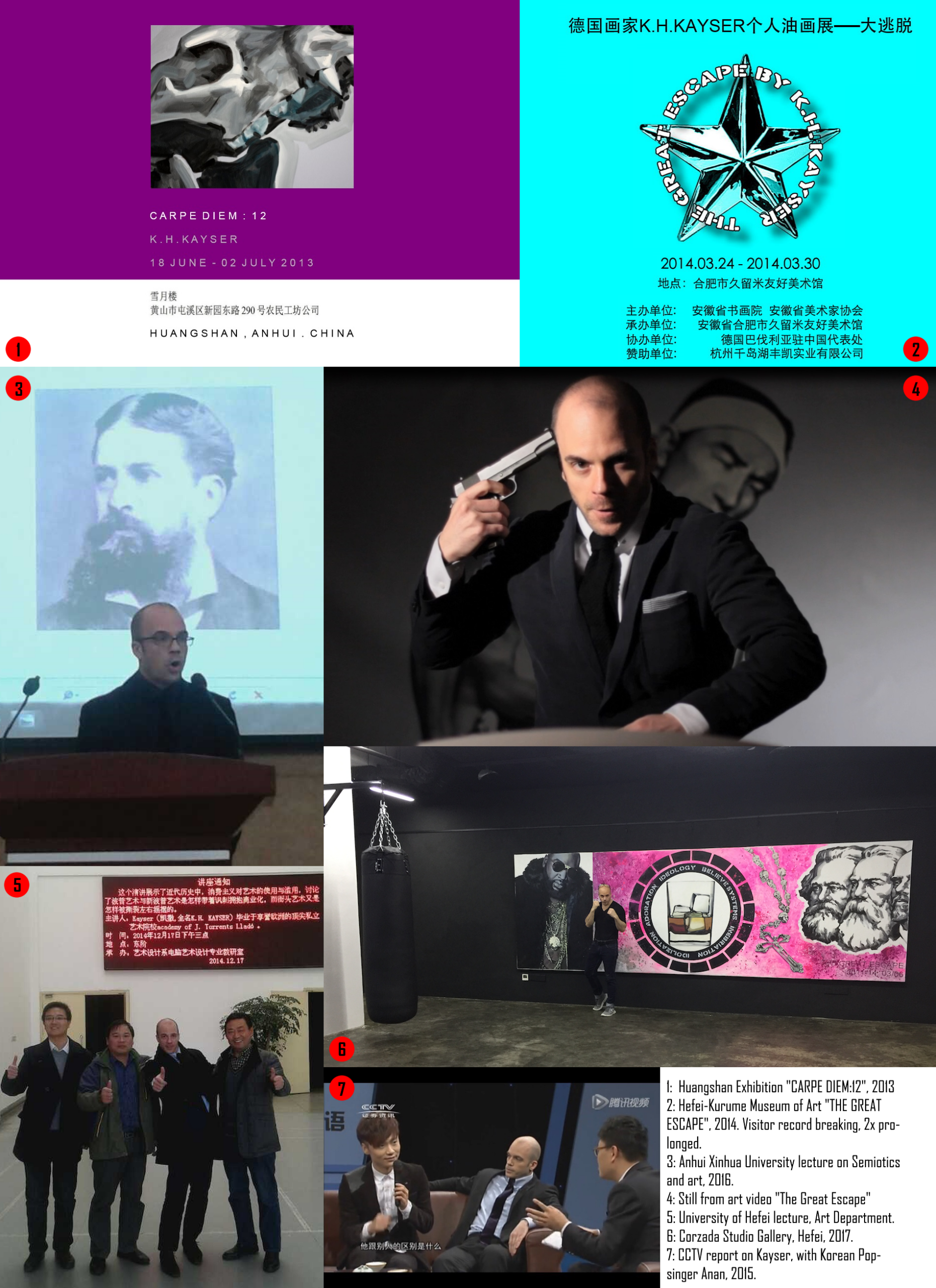
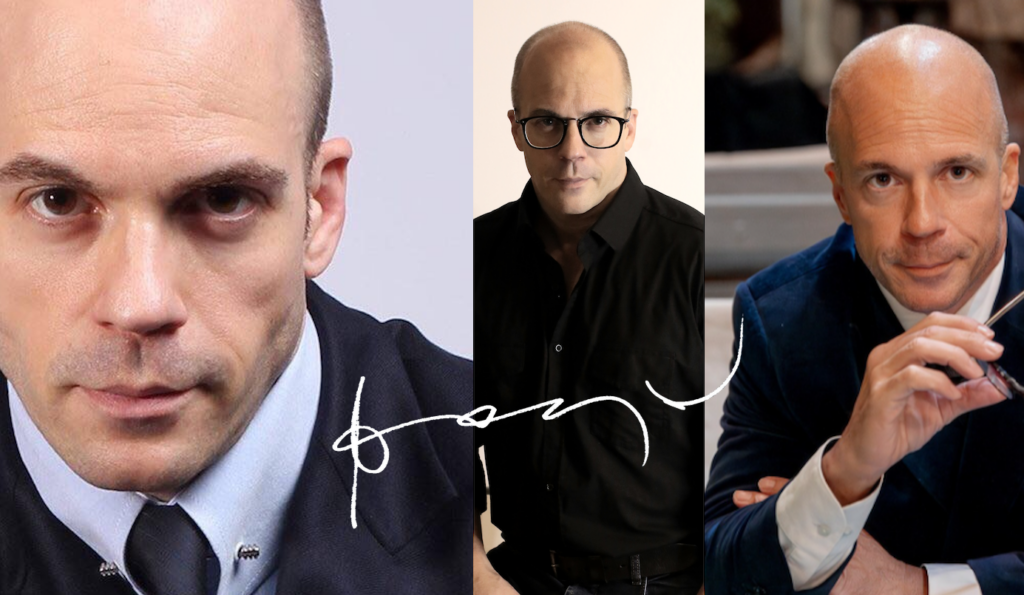
Kai H. Kayser, MBA, MPhil, born 1972 in Munich, Bavaria, is an artist, designer, author and economist living in Portugal. His art is collected around the world, but received most attention in China, Japan and the USA. Kayser taught art and design at the Anhui Xinhua University in Hefei, China from 2014 – 2017.
Besides his economic work, Kayser wrote, designed and produced an animation movie and co-authored a novel in the USA.
LINKS:
1. https://ysxy.axhu.edu.cn/contents/1530/201442871.html
2. https://orcid.org/0009-0000-1700-4997
3. https://www.goodreads.com/book/show/122236070-c5-the-semiotics-philosophy-art-and-design-behind-the-phenomenon
4. https://www.imdb.com/title/tt13772700/
5. https://www.youtube.com/watch?v=bLFAybsJCqg
6. https://www.goodreads.com/book/show/58026063-one-body-in-two-rivers
INTERVIEW 2026, LIBERTADORES MAGAZINE
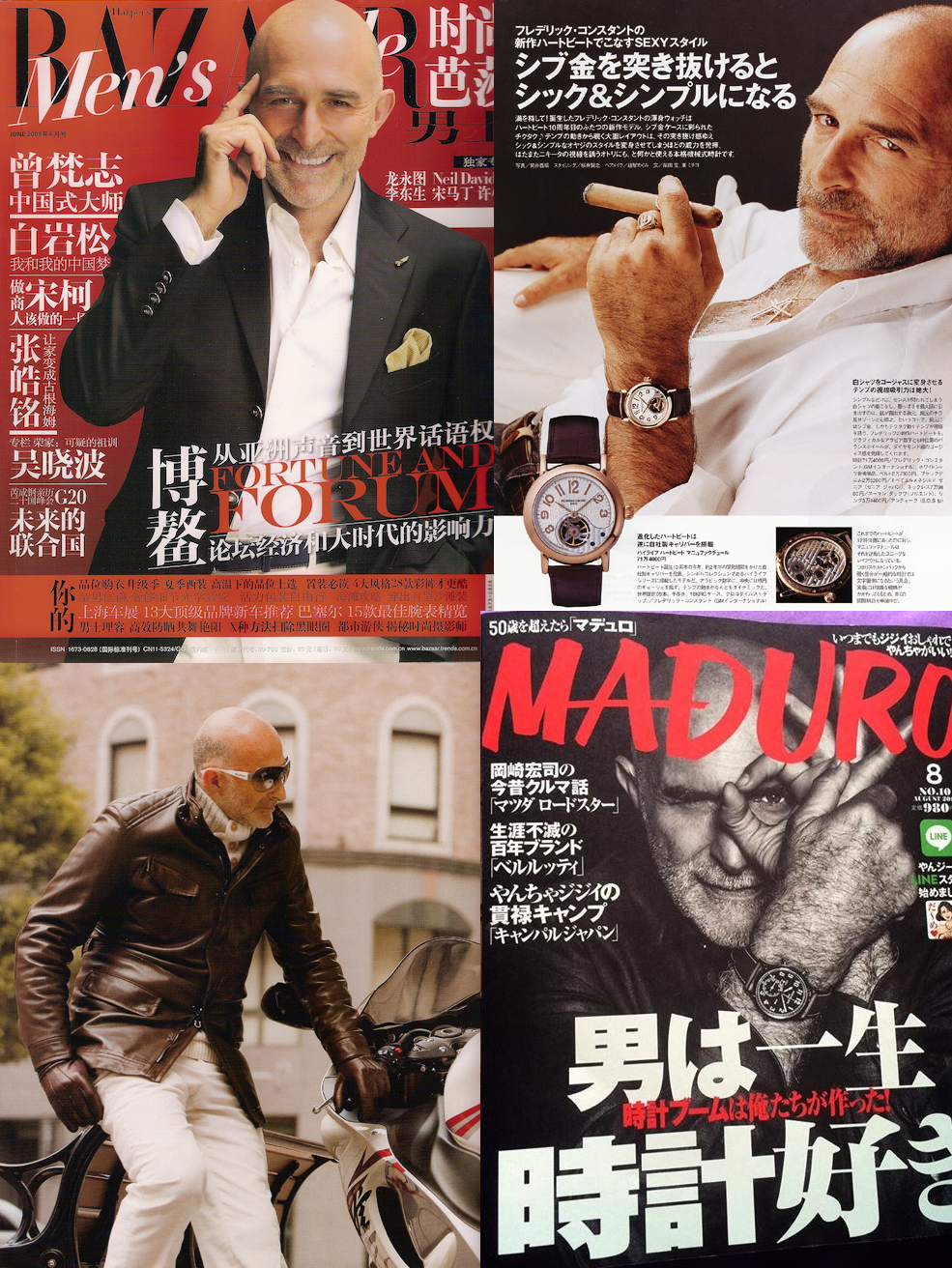
Gianfranco Scimone is one of Japan’s most famous models and fashion icons. The Multilingual actor was discovered by Nino Cerrutti in the 70s and is a much sought after model ever since. As the poster “boy” of the magazine LEON, Gianfranco’s charismatic style not only made LEON one of Japan’s most successful magazines but also started the use of a new term: “Chowaru Oyaji” meaning something like “slightly naughty elder guy” and describes successful connoisseurs over 50, who enjoy sophistication.
Gianfranco and Kayser met a few times in Tokyo and even worked together for a Japanese company for a few months, and their friendship was never restricted by borders, cultures or politics. The two embrace open-mindedness, individuality and freedom, and celebrate the differences of people, talents and countries.
Gianfranco (GF): You invited me to hold this interview, so let me first thank you for having me…
KHK: Thank you so much for agreeing, Gianfranco.
GF: Let’s start with the obvious: Why would you want me to interview you?
KHK: Besides the fact that we have an interesting friendship since many years, a friendship without borders, so to say, we also share a certain independence or “homelessness”. We both chose our homes, and don’t really identify with our places of birth or passports. We have both been working in many corners of this world and did things in our own way. Also, you’re being a bit humble because you actually have plenty of experience doing interviews on stage and as presenter – so, I consider you a real professional.
GF: All true, and thanks for the vote of confidence. You mentioned that we both did things our way, and I couldn’t agree more when I look at your work as you are so versatile, could you list all the things you do and why and how?
KHK: Oh boy, long list…so, I started as an artist, oil painter, and was right after studying hired by an advertising agency, where I did graphic designs and creative work, but got soon drawn into account management and the marketing side of it. I discovered to my surprise that I found it fascinating and helpful to create better, and it opened my eyes to technology. Utilizing computers and photo-editing software is the modern day equivalent to Vermeer van Delft using the camera obscura, to say the least. Internet access made my works better and richer, I developed what I call SEMIOTIC REALISM, where I could indulge my more eclectic side and implement different styles and their techniques. However, after a few years in advertising I started in early 2001 working for and with Deko Design GmbH, and got to design -interiors, events and presentations- for huge and famous companies like Mercedes, Oracle, Siemens, Heineken, JP Morgan and many others. Even some fashion and jewelry companies like Montblanc and Piaget, which was funny as I already tried hard to get into fashion design. That finally happened in late 2011, in Beijing, China. I lived and worked in China until 2019, spending a lot of time in Japan, too. So, from 2014 until late 2017 I taught art and design at the Anhui Xinhua University and loved it, but the overall situation in China worried me and I decided to move to Hong Kong. When the protests broke out and the clashes got ugly, I knew my time in China reached its end and I went back to Europe – heavy heartedly. Europe was already showing severe economic weaknesses, but I decided to take a chance on Portugal, and love it to the day. In Portugal I focused more on my theoretical work and economic studies due to the covid shut downs, but I also wrote some novels and did an animation movie.
It’s a lot and I feel blessed to have led such a eventful life so far. Much like you, going around countries and cultures and having that enormous curiosity for life and knowledge, I embraced the TRIAL & ERROR as my motto in life. However, I also much agree with Dr. Robert Sapolsky and don’t really think that my choices were as free as it may appear. I had to become an artist, a painter, as I was born with a very strong visual proclivity, which was bound to lead me to designing and from there to writing and analyzing. So, for me it never felt like I am doing many things but more like the same thing through different approaches. Maybe quite comparable to you, an actor, both movie and stage who became a model and then worked in media and as presenter…
GF: Absolutely, yes…
KHK: So, the one thing that may make me a little different from some artists, is that I don’t paint for joy or to express myself or my emotions. I explore the world visually, so its surface to understand what’s underneath and how things work. That whole “form follows function” idea is a great sales pitch but in reality style and substance are intertwined and determine one another. So, no wonder I continued from painting to advertising to marketing to economics, painting was my way to analyze society, and design my way to contribute positively.
GF: And did it work? Are your designs having a positive impact? And your paintings helpful for understanding your surroundings?
KHK: Well, yes to the former, no to the latter, I guess. I defined painting at a very young age as “the result of answering one question: how to paint what” and I stand by that. You can answer that question without understanding the first thing of how the world works, and that happened to me more often than not. Design on the other hand has a much underrated depth and helped me significantly more to understand what moves people and society, individuals and groups. And providing a needed product is different from providing a desired one, and maybe because I am a bit naïve or weird I never wanted to the most lucrative things but had that ambition to deliver helpful ones. I was and still am happy to see people happy with what I do.
GF: We worked together for a couple of months where I saw you really doing exactly that, you’re entire thinking and designing and creating is aimed at the client, the customer. It was so interesting to see that, it’s kind of rare I must say, unfortunately.
KHK: I’m afraid so, yes. Today’s bureaucratic and corporate structures see only the revenue, or worse shareholder value solely. As an anarcho capitalist, it always pains me when people mistake that for capitalism, it actually is consumerism or cronyism and a shortsighted way of doing business, ruining progress, innovation and productivity.
GF: So this is how your creativity connects to your economic studies?
KHK: Yes, exactly. To paint for oneself is a hobby, a beautiful one and it can of course be very artistic and creative but it’s not the way I work, or what drives me. I create for others, to make homes nicer, wardrobes more chic, people look and feel better, movements and activities more efficient…and for that I need to understand people and their needs, their lives, their intentions. As an artist I hope to inspire but yes, that is maybe more hope than reality.
GF: Does that mean you are happier designing or writing?
KHK: Absolutely, yes. By far, even. Painting doesn’t make me happy, it doesn’t have any instant gratification like designing does. Painting is a long and tedious process and the most enjoyable part is the composing before hand, the inventing of the painting. Designing on the other hand rewards you at any stage, from understanding the problem to finding possible solutions to trying which works best all the way to the final product in the hands of a happy user. Writing, too, btw, very satisfying at every stage, although it gets a bit overwhelming at the final stages because you go back and re-read and correct so many times. Still-loving it.
GF: Again, I can only confirm that, I have seen you exploring every detail and coming up with solutions all the time and all with passion. from fabric composition to variations in cuts and colors, you were just always searching for the optimum and it motivated people around you. How does your anarcho capitalism and Libertadores fit in? Is that more pleasure like designing or pain, like painting?
KHK: Ha, great question…neither, or both – I simply believe it to be important. Naturally it is very frustrating, very few people can accept my ideas, or those of H.H. Hoppe, M. Rothbard, T. Sowell, D. Friedman or the Austrian school of economics, and already the term “anarcho capitalism” is problematic because few people understand its true meaning and think of violent Molotov-throwing anarchists and equal capitalism with worker’s exploitation. I therefore prefer the term aparactonomy (https://doi.org/10.62891/39006333). Libertadores.eu is my way of peacefully arguing the need for political change in Europe, embracing deregulation, less government and less taxation. Actually, I do believe the Euro is going belly up this year, 2026, and the EU should follow soon, within 6-10 months. The EU is a corrupted organization that failed and is now hurting not only workers, small businesses and the middle class but even large corporations- it’s time to resist and vote it away.
GF: I know what you mean, as much as I love Europe, I left for good reasons and don’t look back. Japan was the better option for me, and appreciate my life here.
KHK: No country is perfect but yes, Japan is still a class of its own, I miss it often, and I completely understand why you chose staying there-smart move!
GF: Will you continue with your animation work? Wouldn’t that call for Japan?
KHK: Honestly, I can’t say, I loved doing the animation short but I’d need a bit more of a team and that would require resources that come with limiting my independent decision making severely. Especially in Japan, where all from storytelling to message conveying differs so much. But hey-never say never! I’m certainly open to possibilities. Movie in general is a visual approach I am naturally drawn to very much since many years, I’d love to do more and explore more, particularly today, where I see a bit of a slump in creative movie making.
GF: What slump?
KHK: Well, a lot of people said very correctly that cinema today is reduced to mega budget super hero movies with spectacular special effects, and too much is simply too much, even of a good thing, and I get the criticism. In general I always liked super hero movies, I see them connected to fairy tales and fantasy, using imagination and symbolism, like E.T.A Hoffmann or Bram Stoker. I also have no issues with the need to make money, profitability is a good thing that creates more options and good things. But not all from the same mold, and I miss movies like Zardoz or Angel Heart. I think it’s still possible to make good movies that are both profitable and profound while not requiring hundreds of millions of dollars but then, maybe I am naïve in that assumption…
GF: When will you bring a new collection out?
KHK: That may take a while, I have something special planned because I do believe fashion the way we know it is pretty much over. People will always need something to wear, to protect them from the cold, snow and rain but the need to express ourselves that way has significantly reduced, we communicate differently today, and we live quite uniformly…smartphones, sneakers, T-shirts, and track suits seem sufficient. We are not that physical anymore, just a smaller subset of insta-gymgoers is very body conscious. The rest is hiding behind screens and avatars. Similar to how we don’t identify through cars anymore, or not much anymore. Times are changing, I don’t have to like it but accept it, and that’s why I am working in a slightly different direction that may or may not translate into textile/apparel, we’ll see. I will say that though, I really miss designing fashion and the days when we were all on edge waiting for new trends and fabrics.
GF: Sounds cryptic, when can we expect to see something?
KHK: Definitely 2026, something in the direction of a “Gesamtkunstwerk” combining various lifestyle aspects with technological options but I won’t say more, not so much because I am afraid of failure but because you have to be the right person at the right time and the right place and when not all three parts come together you gotta understand that and change things accordingly.
GF: Then I hope to get a chance to become a part of it once more, and wish you best luck and much success.
KHK: Thank you so much, I am really looking forward to working together again, believe me!